
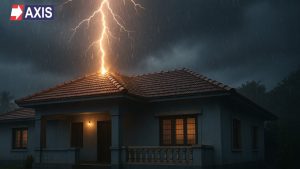
The current finds another way in, through connected power lines, metal fences, pipes, or even the ground. That surge enters the system and damages your electronics.
Most people only look for burns or roof damage. But the real threat may already be inside. Therefore, we will look at the 10 signs in detail.
Starting with direct Strikes.
Signs of Direct Lightning Strike
1) Spark at the point of strike
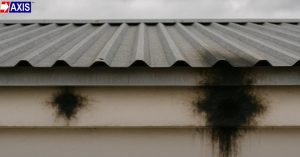
Look for burn marks or black spots on roof edges, metal pipes, antenna mounts, solar panel frames, or any metal part at the top of your structure. This sign shows the exact point where the lightning entered the building.
When lightning hits metal, the current jumps through the air and creates a spark. That spark burns the surface. If you see this, expect damage along the path of that current. The down conductor, surge protection devices, and nearby electronics may also be affected.
2) Melting of metal parts
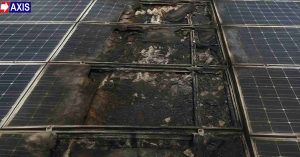
You will see melted or deformed metal on rooftop structures, like solar panel frames, lightning arresters, antennas, or cable trays. The metal may look bent, sagged, or partially melted.
This sign shows that a strong current passed through that metal, heating it instantly. Lightning can reach temperatures high enough to melt metal in a split second. If you see this, expect that the connected conductor may also be weakened.
3) Mechanical or electrodynamic effect
In this case, you will see that metal parts like busbars, cable trays, or clamps have shifted, bent, or become loose after a strike. This can happen inside panels, junction boxes or internal electrical wiring.
This sign means that a large amount of current has passed through the conductor, creating a strong magnetic force. This force can physically push or pull the metal, even though the strike lasted only a few milliseconds.
Now you might be thinking, how is this different from the above signs? First, we saw a spark at the entry point. In the second, the metal melted from the high heat. But here, nothing burns or melts. Instead, the magnetic field around the current pushes the metal, causing it to shift or bend.
If you notice this, expect nearby joints or terminations to be loose. Check all electrical enclosures for signs of movement, arcing, or overheating.
Talk to our engineers!
Next, indirect strikes.
Signs of Indirect Lightning Strike
Now let’s look at the signs of an indirect strike.
1) Sudden damage to electronics

You might notice TVs, routers, inverters, or control panels stop working right after a strike. The device looks normal from the outside, but will not turn on or keeps restarting.
This happens when a surge travels into your building from outside, usually through power or communication cables. Even if lightning hits far away, the surge can travel any connected line and reach your equipment.
2) Voltage rise due to inductance

In this case, the damage does not come from outside. It is generated inside your wiring. When lightning is nearby, the sudden change in current creates high voltage in long wires. This is called inductance. You may not see any damage outside. But devices can still fail, or SPDs can be damaged, especially in buildings with long cable runs or coiled wires.
3) Heating of conductors

You will notice discolored insulation, a burnt smell near cables, or melted cable jackets. This usually happens near panels, busbars, or long cable runs. This sign shows that a large surge current passed through the conductor, causing it to heat up very fast. Even if the cable looks fine from the outside, the insulation inside may be damaged.
If you see this, expect nearby terminations, joints, or breakers to be stressed. Test insulation resistance and check all important connections.
4) Electromagnetic induction
Sometimes after lightning strikes, equipment like routers, controllers, or monitoring devices starts acting strangely. They restart, freeze, or show data errors. This often happens with devices connected by long signal cables.
This sign means lightning passed close to the structure and created a strong magnetic field. That field induced voltage in nearby cables, even without any contact. This effect is called electromagnetic induction.
You might think this sounds like the earlier signs, but here the surge is not coming through power or communication lines, nor is the voltage building up inside your own long cables. It is created directly by the magnetic field from the nearby lightning strike.
5) Touch potential
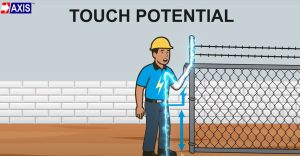
There may be no visible damage. But during or just after a strike, if someone touches a down conductor or any metal part such as a railing, gate, or pipe, they might feel a shock or burn.
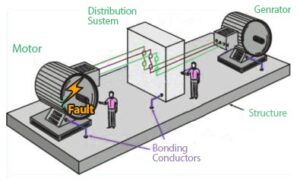
This happens because the metal part is at a different voltage than the ground or nearby surfaces. When lightning strikes close by, the current spreads through the ground and metal. For a few seconds, two connected surfaces may not be at the same voltage. If someone touches both at the same time, the current can pass through their body.
This sign tells us that some parts of the structure are not bonded properly. It becomes a serious safety risk during a strike.
6) Step potential
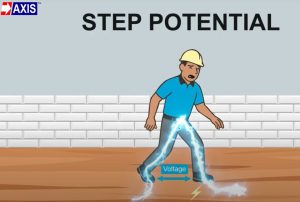
During a strike, a person or animal who is walking near the strike area might collapse, feel a shock or show signs of muscle injury. This happens when lightning hits the ground and the voltage is spread out in all directions.
The voltage is highest near the strike point and reduces with distance. If your feet are apart, each foot touches a different voltage gradient. That difference causes current to flow through your body.
This sign shows that the area around your structure is not safe during a strike, especially for outdoor workers or animals. We have explained the step and touch potential in detail. Link is in the description.
7) Ground potential rise
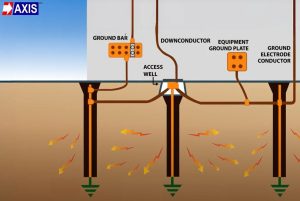
After a strike, you may notice equipment shutting down, surge protectors getting damaged, or communication systems failing without any visible fault.
This happens when lightning strikes the ground near your structure. The current spreads through the soil and raises the voltage of your entire earthing system for a few seconds. That high voltage can enter through earthing points, cable shields, or metal pipes.
This sign shows that the strike energy entered from below, not through overhead cables. It affects everything connected to the earthing system.
If you see these effects, test the earth resistance and check all earthing bonds. Also, check for signs of breakdown in surge protection devices.
We hope you now have a clear understanding of the 10 signs of a lightning strike. The lightning protection systems manufactured at Axis are designed to handle both direct and indirect strike conditions, as seen in real-world installations.
At Axis, we have a team of 40+ engineers who are here to help you in designing, installing, and testing your Lightning Protection Systems. Our products have been used in substations, data centers, factories, and even in everyday residential and commercial buildings. For product details, technical guidance, and ESE lightning arrester price information, feel free to contact our team.
Thank you for reading and if you found this informative, then feel free to contact us to get a quote or to know more about our products; visit our product section at https://axis-india.com/products/