

It is a globally recognized safety approval provided by Underwriters Laboratories, a non-profit organization based in the United States. This certification ensures that products, components, systems, and materials meet strict safety, performance, and environmental standards.
It is a trusted symbol of safety, especially in the electrical industry. The main goal of UL is to make products safer and reduce risks such as electrical shocks, fires, and mechanical hazards.
UL Testing Procedures for Earth Rods
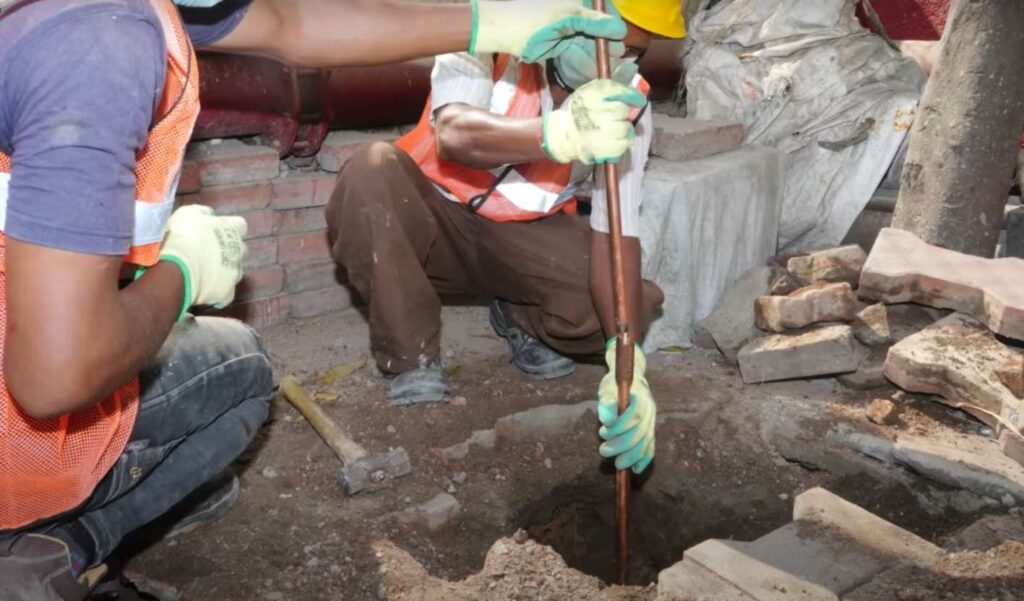
Earth Rod is an electrode that is buried directly in the ground to facilitate the flow of fault currents. Electrical resistivity, corrosion resistance, mechanical strength and conductivity are some prominent electrical properties which are essential for Earth Rods, UL standard ensures that these properties are tested, and electrical safety is maintained by doing certain tests, let’s understand them in detail.
1. Coating Thickness Test
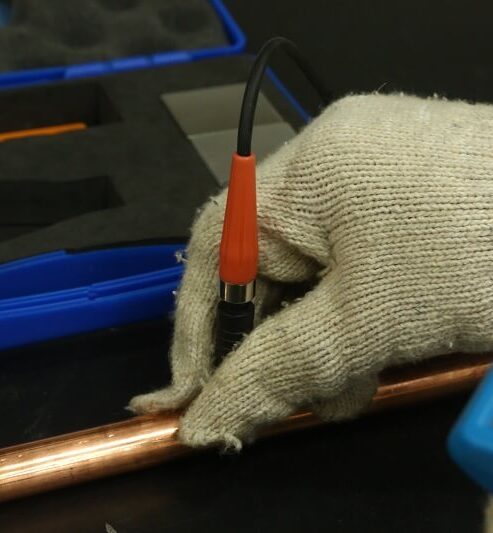
This test ensures that the Earth Rods have the minimum required coating thickness. This prevents corrosion, prolongs the rod’s lifespan, and guarantees proper electrical conductivity. The test also verifies your rod’s quality, performance, and compliance with safety standards.
To conduct the test, we use a coating thickness gauge instrument, it calibrates with the master calibrator plate at the time of testing itself and shows the coating thickness reading in microns.
As per UL 467 minimum copper coating thickness should be 254 microns. Axis Earth Rods easily surpasses the minimum requirement ensuring good quality and healthy performance.
2. Adhesion Test
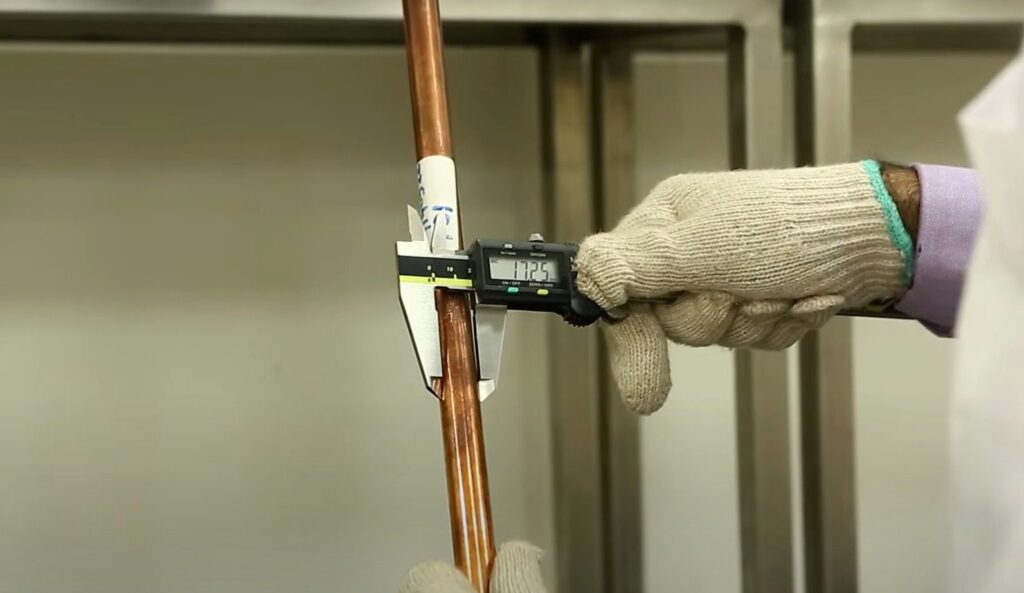
This test evaluates the bond between the Earth rod’s core material and its protective coating, ensuring the coating remains intact throughout its lifespan. This provides effective corrosion resistance and preserves electrical performance, which is vital for your rod’s safety.
The rod is placed between two clamping plates that are set 1 millimeter tighter than the rod’s diameter. The rod is then hammered to apply direct impact on the copper coating.
After the test, the coating should remain firmly attached to the base metal and should not peel off. This is a sign of good adhesion.
3. Bend Test
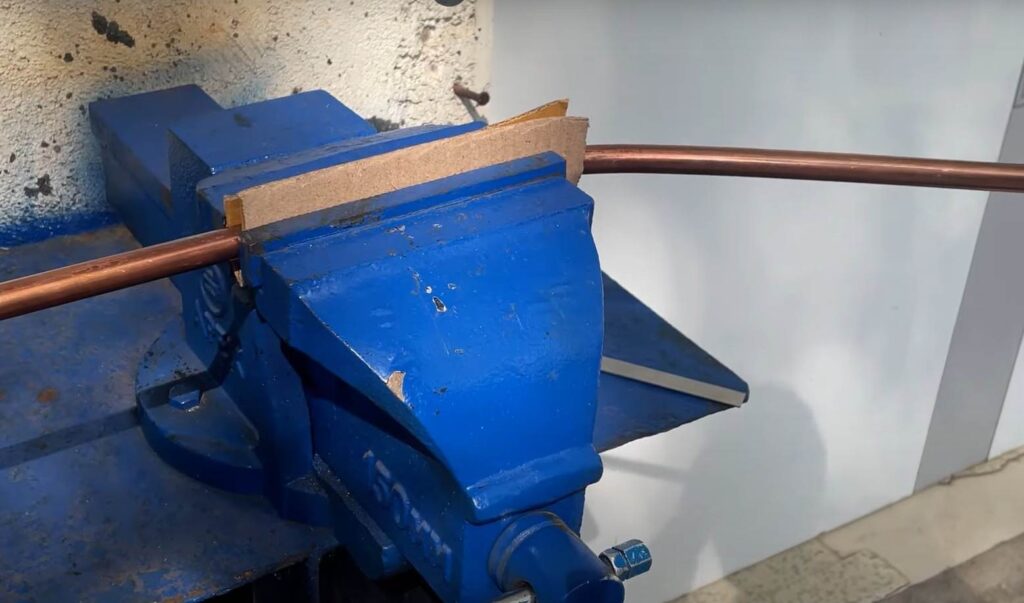
This test checks if the earth rod can handle bending without cracking or damaging the copper coating. It confirms that the rod is strong enough for installation and use in the field.
To perform the test, fix the rod in a vice and bend it until it stays at a 30-degree angle. The rod passes the test if the copper coating stays intact after bending. A strong coating ensures long-term durability and safe electrical performance.
Talk to our engineers!
Tests for Grounding Clamps
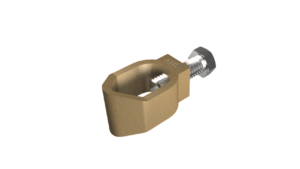
A clamp holds or secures objects tightly together, preventing movement or separation from inward pressure. It is an essential tool in electrical and construction work.
For earthing, clamps create an electrical connection between a conductor and the earthing system. You will find them installed in electrical and construction applications, providing secure and reliable grounding points for electrical systems.
1. Secureness Test
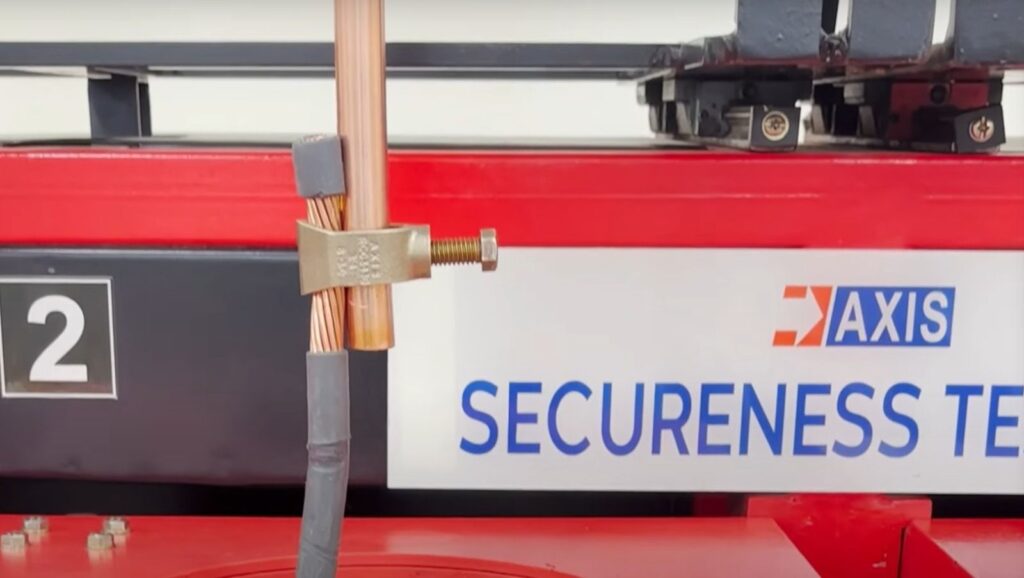
This test checks if the clamp can hold the conductor firmly under mechanical stress, preventing any accidental disconnection.
To perform the test, mount the clamp on a conductor in a vertical position to match actual installation. Insert the conductor into the secureness test machine, and hang a weight at the lower end. The required weight and bushing diameter depend on the conductor size, as mentioned in Table 26 of UL 486 A & B.
The conductor passes through a rotating bushing placed at a fixed distance from the clamp. The rotation path must have a minimum diameter of 76 millimeters and rotate at 9 revolutions per minute.
The clamp is subjected to this motion continuously for 30 minutes. This recreates movement caused by wind or vibration in outdoor installations. After the test, there should be no broken conductor strands, stripped threads, or any damage to the clamp components.
2. Mechanical Pull-Out Test
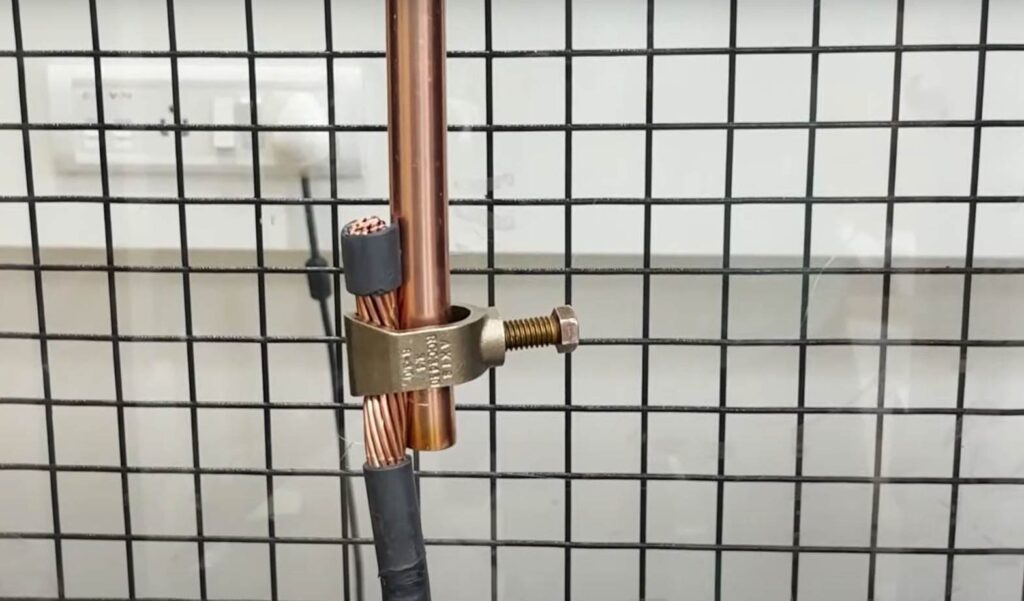
This test checks if the clamp can hold the conductor firmly when pulled in a straight line. It ensures that the grip remains secure during mechanical stress or accidental force. To perform the test, mount the conductor with the clamp installed on a test bench. Hold the clamp firmly in a tensile machine and pull the conductor in the axial direction until the required force is reached.
The required load, based on conductor size, is given in Table 27 of UL 486 A & B. Hold this force for 1 minute. To pass the test, there should be no damage to the clamp. The conductor should not slip, and none of its strands should break.
We hope you now have a clear understanding of how Earthing equipment are tested by UL.
Note: There are more tests, these 5 tests are among the prominent ones.
At Axis, we ensure that our clamps are subjected to these comprehensive tests in our NABL accredited and UL approved inhouse Testing Lab. We never compromise on quality, which is why millions of earthing and lightning protection solutions are installed across the world. We have a team of 50+ engineers who are here to help you in designing, installing and testing your Lightning Protection Systems.