But before we talk about approvals, let us understand the basics.
What are Cable Lugs?
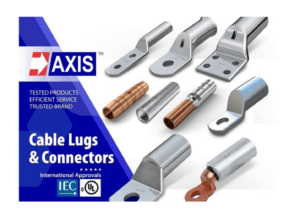
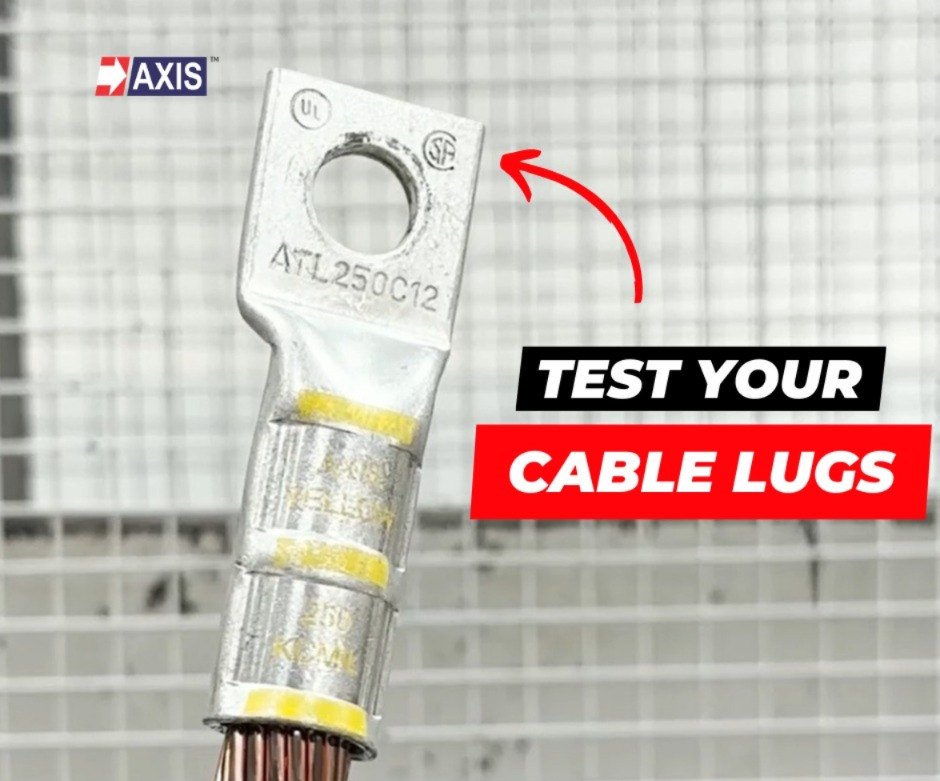
A cable lug is a connector that joins an electrical conductor to a terminal point such as a busbar, breaker, switchgear, or equipment stud. It creates a strong mechanical hold and a low resistance electrical path between the cable and the equipment. Lugs are usually made of copper, aluminium, or bimetal, depending on the application.
Now that you understand what a cable lug is, the next question is important.
How to get these International Approvals?
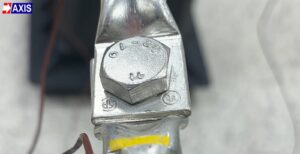
Note: Before starting, please ensure that you use proper tools, procedures and personal protective equipment to avoid injury.
A) Static Heating Test
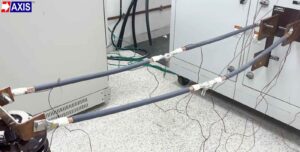
This test checks how a lug performs when it carries current continuously at its rated load. A test loop is prepared with several lugs and a copper conductor. Current at 60 hertz is passed through the loop at the value given in UL 486A 486B.
The lugs carry this current until the temperature becomes stable. The temperature rise must not exceed 50 degrees Celsius above ambient, as stated in UL 486A 486B.
During the test, the joint is monitored for temperature rise and resistance. Axis Lugs have passed the test because the temperature stayed within the 50-degree limit and the resistance remained steady. This confirms that the lug maintains a safe and stable connection under long duration electrical load.
Talk to our engineers!
B) Secureness Test
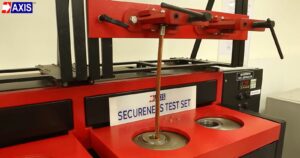
This test checks if your lug stays fixed to your cable when the joint faces movement such as twisting, rotation or side pull after installation. The lug is first crimped onto the cable using the correct tool and the required number of crimps.
After crimping, the lug is placed on the secureness test equipment. Weights listed in UL 486A 486B are attached to the cable, and the cable rotates for the time specified in the standard. At the end of the rotation, there should be no slippage between the conductor and the lug.
As you can see, Axis lugs have passed the test, confirming that the joint stays firm when the cable moves during installation or routine maintenance.
C) Pull-Out Test
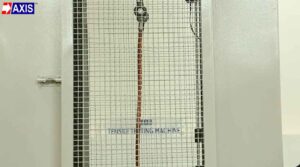
The pull-out test helps you confirm if your lug can hold the cable when it faces a force that tries to pull it out. First, crimp your lug onto a standard cable and place the sample on a pull-out testing machine. The machine pulls the cable with a force that increases with time.
UL 486A 486B gives the minimum pull-out force for each lug size. For example, a copper lug of this size must hold more than 1 kilo newton. If your sample meets the required pull-out value, it means the joint can handle strong pulling force during installation or cable movement.
At the end of the test, the lug passes only if the conductor does not break, the strands do not separate and the connector does not show any damage. As you can see, Axis Lugs have passed the test.
We hope you now have a clear idea about these tests. All these tests are done at our in-house testing lab in Mumbai, which is accredited by NABL and approved by UL.
At Axis, we supply cable lugs to more than 100 countries. We have a team of more than 50 engineers who help you with lugs, connectors and lightning protection systems.
Thank you for reading and if you found this informative, then feel free to contact us to get a quote or to know more about our products; visit our product section at https://axis-india.com/products/