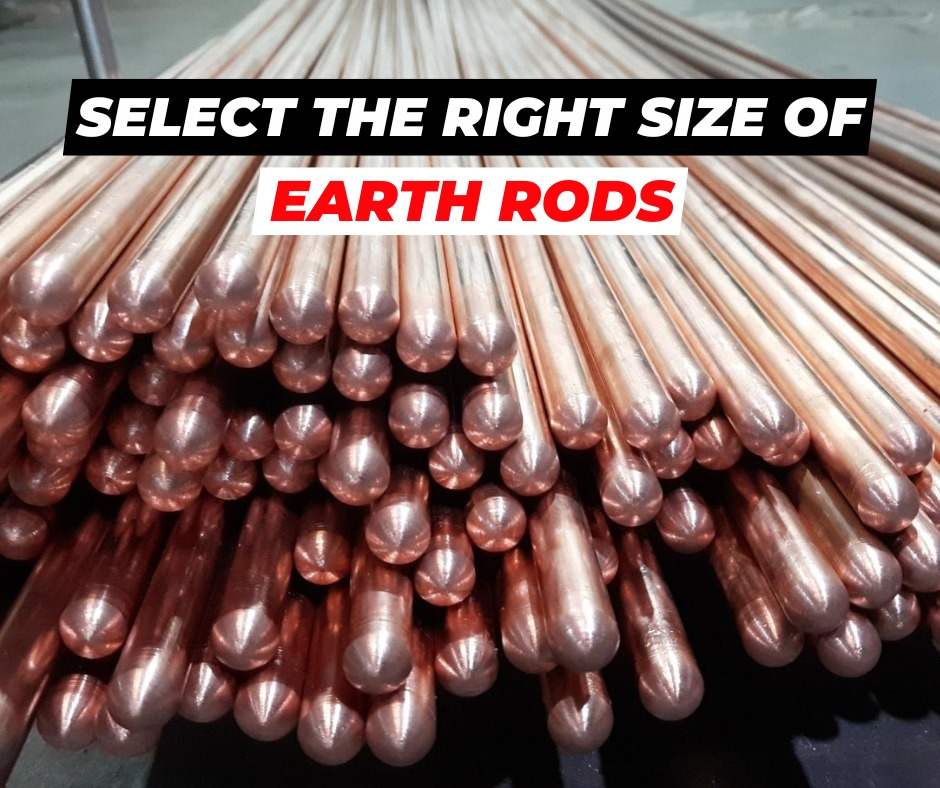
What is an Earth Rod?
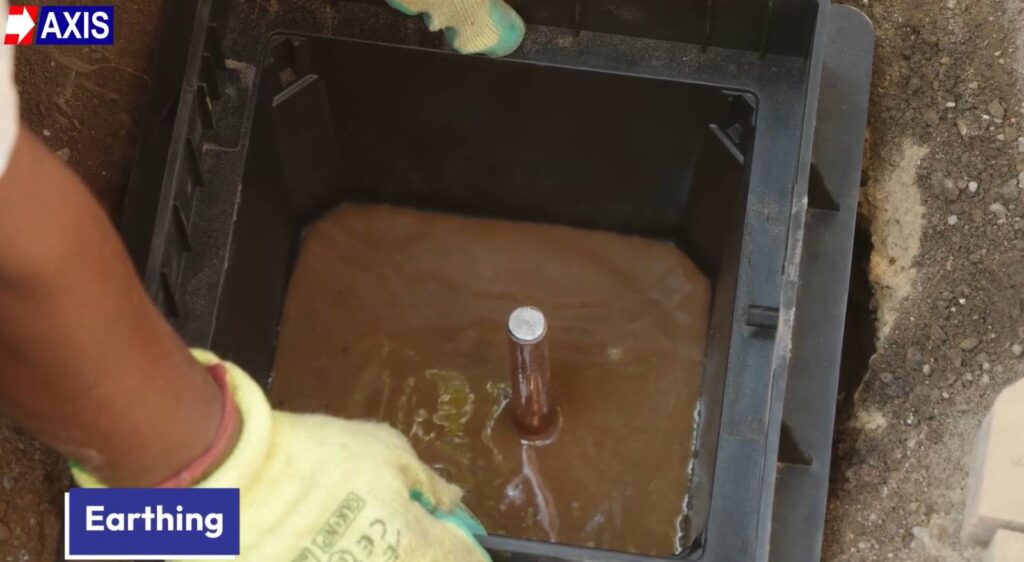
An earth rod is a type of earth electrode, and is an essential part of any lightning protection and earthing system.
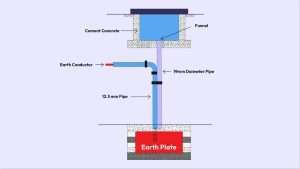
An earth electrode is a conducting element buried deep in the ground, which enables the flow of fault currents into the earth. These electrodes come in a variety of materials, shapes and sizes including pipes, plates, a ring around the structure or as an Earth Rod.
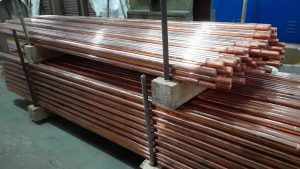
There are different types of earth rods like Copper, Copper Bonded, Stainless Steel, Galvanised Steel.
Each has different applications and cost effectiveness.
- Pure Copper has the best conductivity.
- Copper Bonded rods work best in normal soil.
- Stainless Steel prevents galvanic corrosion.
- Galvanised Steel offers the most economical option.
Standards & Design for Earth Rods
But the problem arises when you compromise on dimensions to save cost and choose the wrong diameter and length. Earth rod dimensions should be selected based on your specific application. For an earthing system design, dimensions depend on fault current and soil resistivity, as per IEEE 80.
If you are selecting earth rods for a lightning protection system, the dimensions depend on the cross-sectional area, as per IEC 62305, which is followed in India.
However, different countries follow their own standards, based on fault current and lightning current dissipation. Let’s understand this in detail.
Cross-section area is the thickness of your earth rod measured in millimeters. It determines how much lightning current your rod can safely carry. Look at this table from IEC 62305-3. It specifies minimum cross-section requirements for different materials.
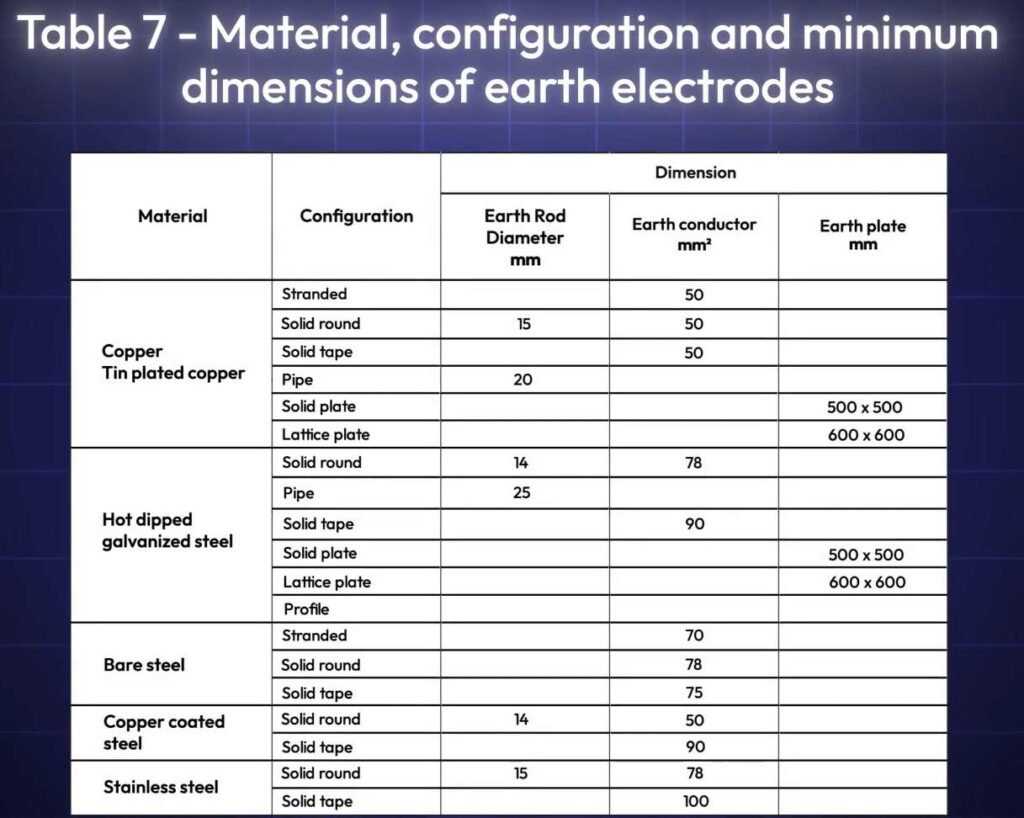
- Copper, tin-plated requires 15mm because copper has high conductivity, allowing a thinner rod to handle fault current safely.
- Hot dipped galvanized steel needs 14mm because it has lower conductivity than copper, requiring a thicker rod.
- Copper coated steel requires 14mm because the coating provides conductivity, which is slightly lower to copper, hence it needs bigger diameter compared to copper.
- Stainless steel needs minimum 15 mm. This type is mainly used to avoid corrosion.
The logic behind these measurements is simple. Different materials have different electrical conductivity and thermal properties. Because of this, when lightning current passes through a conductor, the material’s ability to handle heat becomes critical. IEC 62305-3 defines the minimum cross-sectional area required to carry the peak lightning current safely, limit temperature rise, and withstand the mechanical stress caused by electromagnetic forces.
If the rod is smaller than this requirement, it can’t handle the energy from a lightning strike. It overheats, weakens, and may fail, putting your structure’s electrical safety at risk.
Now that you have chosen your material and its thickness, comes the critical question:
Talk to our engineers!
Length of Earth Rod
The length of your earth rod determines its electrical resistance to ground, and is selected as per the level of lightning protection required. Resistance is the opposition to electrical current flow. When lightning strikes, it needs a low-resistance path to safely dissipate into the earth. If your rod is too short, the resistance stays high, and the lightning current cannot escape efficiently. This causes voltage build-up, which can damage your structure and equipment.
Your earth rod’s length directly relates to soil conditions. Soil resistivity measures how well soil conducts electricity. This varies by location.
Sandy or rocky soil has high resistivity, meaning it conducts electricity poorly.
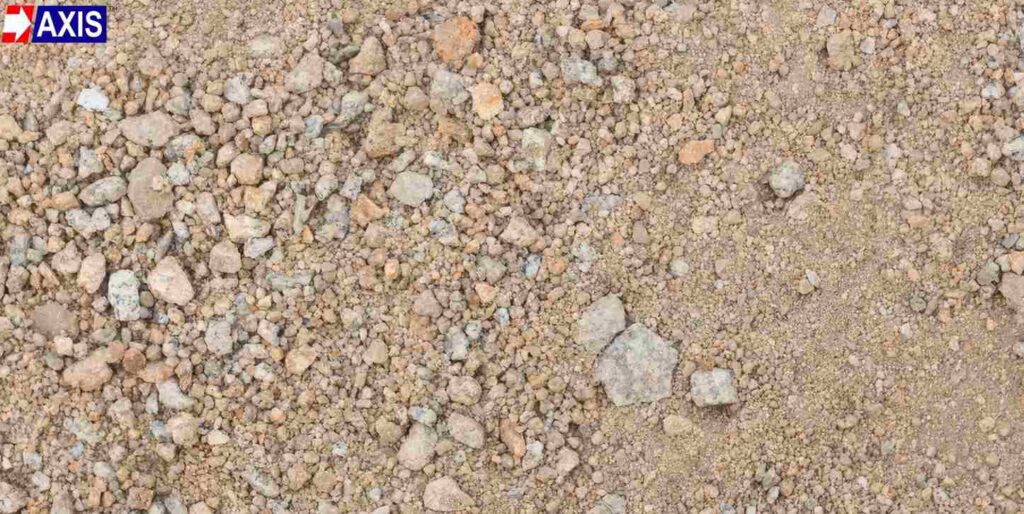
Clay and moist soil have low resistivity, meaning they conduct electricity well.
For example – 1 Meter rod in moist clay soil achieves far better earthing than the same rod in rocky soil. Hence, to compensate for poor soil, you need a longer rod.In soft and moist soil, you need to drive the earth rod at least 3 meters deep. In poor or rocky soil, use longer rods or install multiple rods in parallel to get proper earthing.
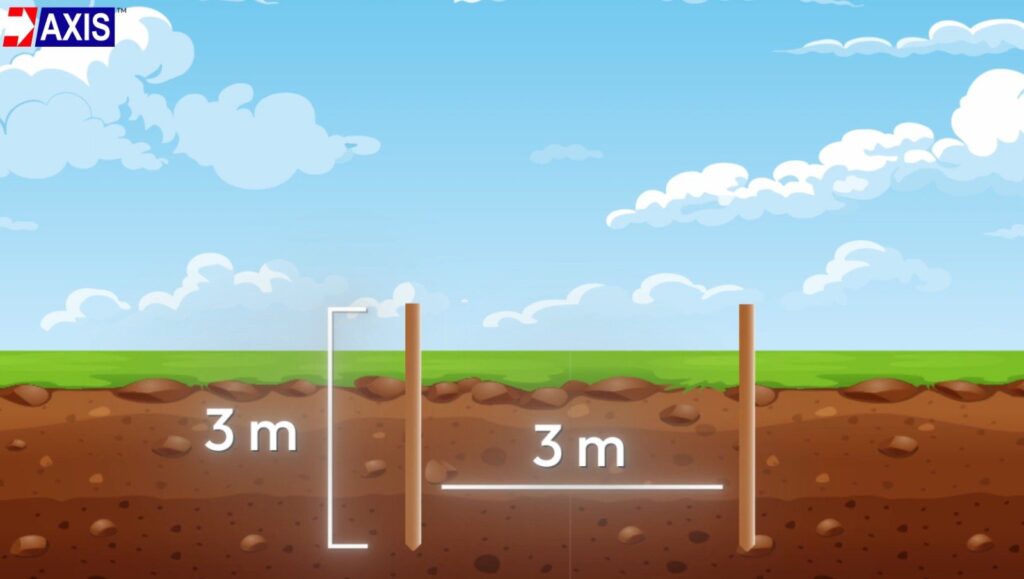
Spacing is important too. If you use two rods, keep at least one rod length between them. For example, if your rod is 3 meters long, space them 3 meters apart. This prevents the grounding zones from overlapping and keeps the system efficient.
Dimensions of Earth Rod
Here, the selection process is different from lightning protection. While lightning protection focuses on handling peak currents during a strike, earthing systems handle continuous fault currents and prevents electric shock, as per IEEE 80.
So, how do you choose the right length and diameter for your rods?
Start by calculating the resistance. Resistance shows how easily fault current can flow into the earth.
Lower resistance means the current flows out faster and safer. Higher resistance means less current can escape. According to IEEE 80, you can use this formula to calculate resistance. It shows the relationship between soil resistivity, rod length, rod diameter, and the total resistance you get.
Rod Resistance Formula:
R = (ρ / 2πL) × [ln(8L/d) − 1]
Here:
R is the resistance in ohms
ρ is Soil resistivity in ohm-meters
L is Rod length in meters
And d is Rod diameter in millimeters
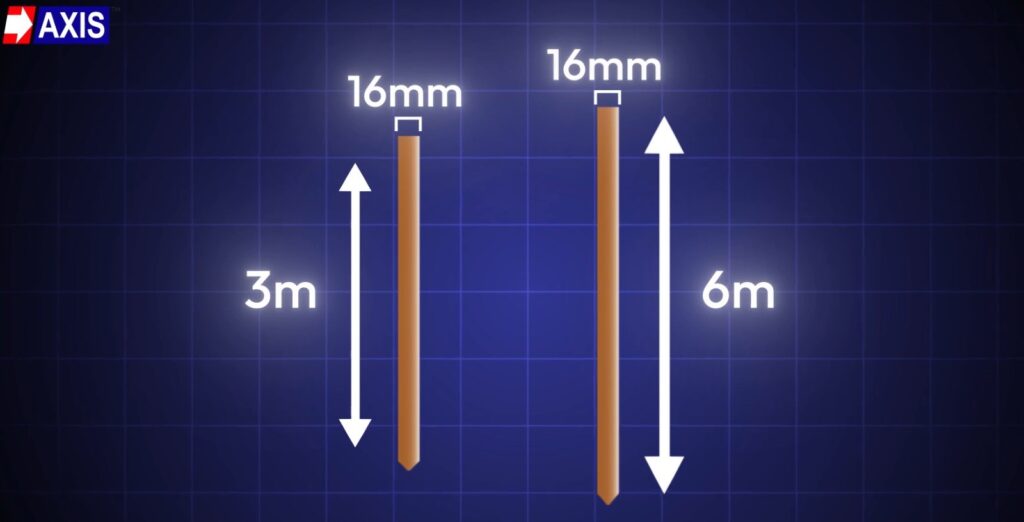
Let’s understand this with an example. Let’s say you have soil with resistivity of 100 ohm-meters. You are considering two rods, one is 3 meters long with 16 millimeters diameter, and another is 6 meters long with the same diameter.
For the 3-meter rod, after applying the formula, your resistance comes out to approximately 33 ohms. For the 6-meter rod, your resistance drops to approximately 19 ohms. Depending on the resistance you need, you can reach that value in two ways – either by driving a single rod deeper into the ground, or by using two or more rods connected in parallel.
We hope you now have a brief idea of how to select Earth Rods. At Axis, we have a team of 50+ engineers who design, install, and test Earthing and Lightning Protection Systems as per your requirement.
Axis’s products have been used in substations, data centres, factories, and even in everyday residential and commercial buildings.
Thank you for reading and if you found this informative, then feel free to contact us to get a quote or to know more about our products; visit our product section at https://axis-india.com/products/