What is Earthing?
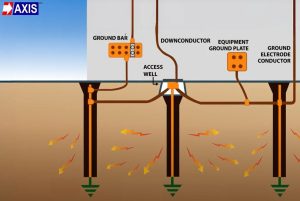
Earthing, also known as grounding, is a process that connects your structure’s electrical system to the earth. This provides a low-resistance path for fault currents, protecting your equipment from damage and keeping you safe from electric shocks and fires.
Common Problems:
1. Earth Enhancing Compound
This compound is made from a mix of minerals that has lower soil resistivity. Its main feature is the ability to absorb and hold moisture, which helps your earthing system maintain a consistent electrical resistance over time.
However, to save cost, some people use salt and charcoal instead of Earth Enhancing Compound. Salt, when mixed with water, is ionized and becomes corrosive to earth electrodes. It also requires constant maintenance and watering. Charcoal degrades over time and loses its ability to hold moisture. Both materials are not maintenance-free and will corrode your earth rod in the long run. Therefore, earth enhancing compound is preferred.

Our Axifill earth enhancing compound is tested as per international standards such as IEC 62561-7, IEEE 80, and BS 7430. These certifications prove the compound performs reliably in extreme conditions.
2. Earth rod

>

In areas with different metals nearby, stainless steel rods prevent galvanic corrosion.
>

In normal soil, copper-bonded rods work well. This type is the most popular earth rod used across the world. Axis copper-bonded rods comply with IEC 62561-2 and UL 467.

However, many people choose galvanised steel for every type of soil.
Galvanised steel is economical but provides limited corrosion resistance compared to others. It is not recommended in high-corrosion areas because within a few years, it might lose its ability to conduct current. This will fail your earthing system.

Talk to our engineers!
3. Earth Pit Chamber
An earth pit is an enclosure used in earthing systems to access and maintain the earth electrodes and other components. It typically has a removable cover, which allows safe access to the interior of the chamber. This makes inspection, testing, and maintenance of your earthing system easy and safe. However, many people construct brick chambers made with cast or chequered plates. This approach costs more money, takes more time, and requires more space. Therefore, it is better to use FRP earth pit chambers.

These are lightweight, easy to install, and withstand loads up to 5000 kg. They require less space, provide uniform construction, ensure durability, and maintain consistent quality. Earth pit chambers manufactured at Axis are tested as per IEC 62561-5.
4. Clamps
A clamp is an electrical fitting used to attach the grounding wire to the earth rod. It creates a secure connection between the wire and the rod, ensuring good electrical contact. This helps dissipate fault currents safely.

However, for equipment earthing, using copper clamps is recommended so it can handle fault current effectively. But people go with stainless steel instead of copper. Which is fine, if it passes the required fault current. If your clamp is not strong enough to handle that, there is a chance it will explode.
We hope you now have a clear idea of how to avoid these errors. At Axis, we have a team of 50+ engineers who design, install, and test Earthing and Lightning Protection Systems as per these standards.
Our products have been used in substations, data centres, factories, and even in everyday residential and commercial buildings. If you found this video helpful, please give it a like and subscribe to our channel for more insightful content on Electrical Engineering.
Thank you for reading and if you found this informative, then feel free to contact us to get a quote or to know more about our products; visit our product section at https://axis-india.com/products/