
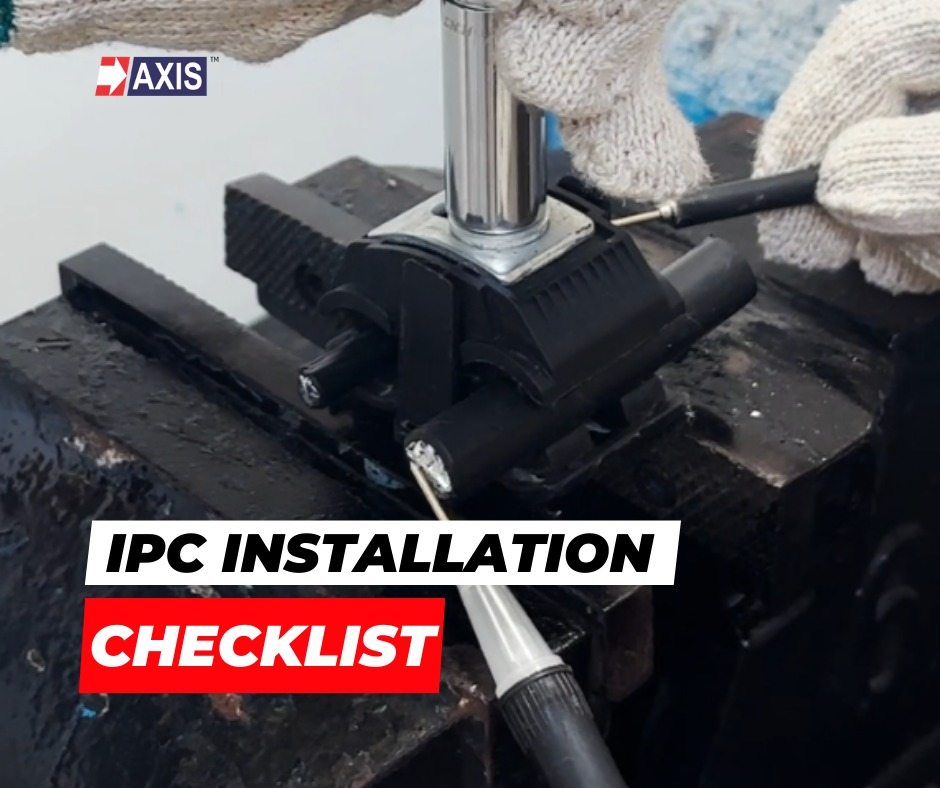
Insulation Piercing Connector Installation Checklist
. This checklist helps ensure reliable and long-lasting connections on site.
What are Insulation Piercing Connectors?
IPCs are used to connect two insulated cables without stripping insulation.
When tightened, metal teeth pierce the insulation to create a secure,
low-resistance, waterproof connection in
Low Voltage Aerial Bundled Cable systems
.

The Installation Checklist
1. Product Specification & Standards
Ensure the connector complies with:
• NFC 33-020 (Low Voltage)
• EN 50397-2 (Medium Voltage)

2. Correct Connector Selection
Always match the connector with the cable size. Incorrect sizing leads to poor contact and possible failure.

3. Proper Cable Identification
Identify phase and neutral correctly. Wrong installation can cause faults and power loss.

4. Endcap Installation
Always install the end cap to prevent moisture entry and corrosion.

5. Tightening of Shear Head Bolt
Tighten until the shear head breaks. This ensures correct torque and proper connection.

6. Engineering-Grade Plastic
Use high-quality UV-resistant plastic connectors for durability and safety.

7. Do Not Use IPC as a Midspan Joint
IPCs are for branching only, not for joining cables. Use proper joints for tensile applications.

Conclusion
Following this checklist ensures safe and efficient IPC installation. Axis products support major electrification projects like SAUBHAGYA and RDSS.
Talk to our engineers!
Thank you for reading.
Contact us
or visit
our product section.