
What are Covered Conductors?
Covered conductors look like conventional overhead lines, but they have several protective layers around the aluminium core. These layers block moisture, resist sunlight, and make the line safer near trees, animals, and people. Therefore, DISCOMS use them in electrical transmission and distribution lines.
And this brings us to why we are discussing tools today. If the wrong tool is used during installation, the accessory may not grip properly, may damage the insulation, or may leave gaps that invite failures later. A simple mistake like this can bring down the reliability of your entire line.
Tools Used During Installation:
1. Ratchet Spanner or Torque Wrench

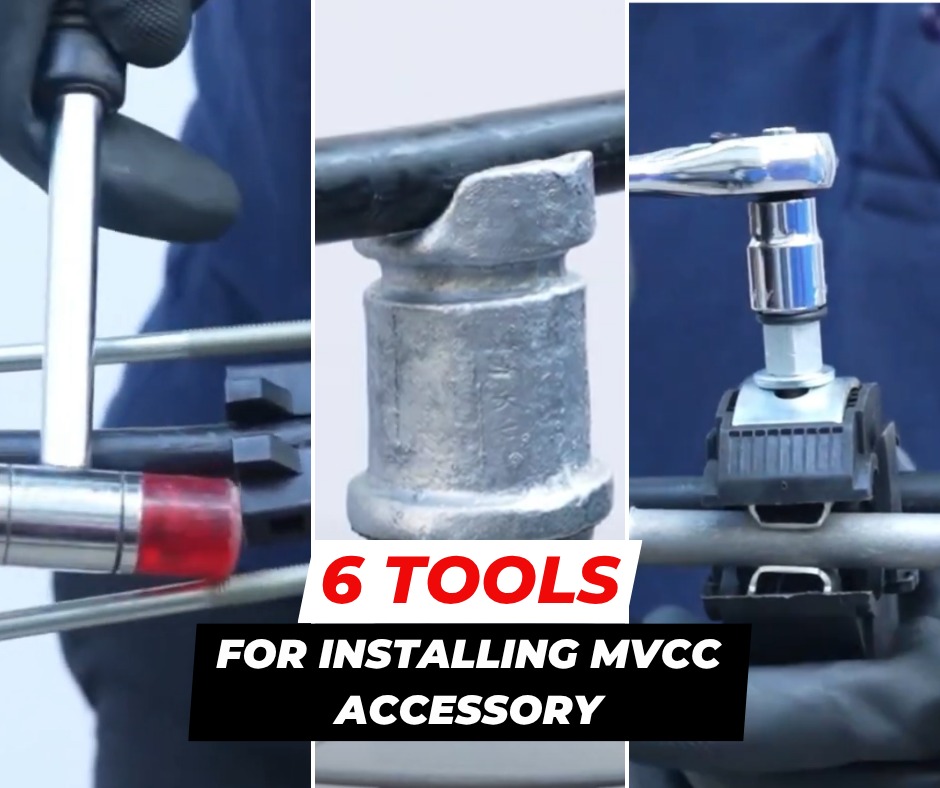
When installing MV Insulation Piercing Connectors, you need a ratchet spanner or torque wrench. These tools are used to tighten the shear nut on the connector. Tightening should be gradual, with even pressure. You have to keep turning until the top small hex head of the shear nut breaks off. That break ensures the correct torque has been applied and the connection is secure. Using the right tool here avoids under-tightening, which causes loose joints, or over-tightening, which can damage the connector.
2. Suitable Spanners

During every installation of clamps, connectors, or preformed ties, suitable spanners are mandatory. These are the regular spanners used to tighten bolts, nuts, and fixing assemblies. Correct tightening keeps the insulator and fittings aligned and stable under mechanical stress. If the bolts are left loose, the assembly can shift or slip, and under conductor tension it may even fail completely.
3. Mallet Hammer or Pliers


While installing MV Anchoring Clamps, these tools are essential. The mallet hammer helps to position the wedges firmly on the conductor without damaging its insulation. If you skip using these tools, you may end up denting or cutting the XLPE layer on the conductor. Once the insulation is compromised, moisture can enter and make the conductor risky. This creates weak points in the line, unsafe contact areas, or loose clamps that may fail under mechanical load.Talk to our engineers!
4. Crimping Tool


When installing lugs and connectors on MV Covered Conductors, a crimping tool is essential. It compresses the connector barrel onto the conductor strands, creating a strong mechanical bond and a low-resistance joint. Always use the correct die size marked on the lug or connector.
You can use either a battery-operated or a manually operated hydraulic crimping tool. Both ensure the connector is crimped to the required standard. If you skip the crimping tool or use the wrong die, the joint may remain loose or uneven. This leads to overheating, corrosion, and possible failure of the connection under load. We have a dedicated video showing the crimping process, link is in the description.
5. Fixing Assembly

For installing Anchoring Clamps and Insulators on MV Covered Conductors, a fixing assembly is required. This includes the Mounting D Iron Bracket, along with bolts, nuts, and washers, that secure the insulator and clamp to the cross-arm. The Mounting D Iron Bracket is commonly used in anchoring and dead-end installations where the conductor needs to be firmly held and aligned. It provides the base for attaching the insulator so the anchoring clamp can grip the conductor under tension.
Using the right fixing assembly ensures the insulator stays stable and the clamp holds the conductor without slipping. If this assembly is undersized or not installed correctly, the alignment can shift, the clamp may loosen, and the conductor can lose its designed tension. This can lead to a line failure.
6. PPE – Personal Protective Equipment

For every type of electrical installation, PPE is mandatory. This includes insulated gloves to protect against accidental contact with live parts, safety glasses to guard against flying debris while tightening or hammering, and a safety helmet for overhead work.In some cases, a safety harness is also required when working at height on poles or cross-arms. Skipping this puts the installer at direct risk of electric shock, injury from falling objects, or accidents during line work. Carrying the right protective gear is as important as carrying the right tools.
We hope you now have a clear idea about the tools required to install Covered Conductors Accessories. At Axis, we are proud of our contribution to rural electrification projects across India, Africa and the globe. Axis products are critical to the success of government schemes like SAUBHAGYA and currently running RDSS as well, playing a key role in enhancing electrical infrastructure.
Thank you for reading and if you found this informative, then feel free to contact us to get a quote or to know more about our products; visit our product section at https://axis-india.com/products/